Peptide Research Deep Dives
In-depth overviews, mechanism breakdowns, compound comparisons, and laboratory method guides — all sourced from peer-reviewed literature. Not medical advice.
TB-500 vs BPC-157: A Side-by-Side Research Comparison
TB-500 (Thymosin Beta-4) and BPC-157 are frequently studied together for tissue repair applications. This comparison examines their distinct mechanisms, overlapping effects, and what the combined literature suggests.
Understanding GLP-1 Receptor Agonists: Semaglutide and Beyond
GLP-1 receptor agonists represent one of the most studied peptide classes in modern pharmacology. This article covers the mechanism, key compounds, and clinical trial landscape from semaglutide to retatrutide.
What Is BPC-157? A Research Overview
BPC-157 is a synthetic pentadecapeptide derived from human gastric juice with an expanding preclinical literature covering tissue repair, angiogenesis, and gastrointestinal protection. This overview summarizes the primary research findings.
VK2735 vs Semaglutide (2026): Phase 3 Dual GLP-1/GIP Agonist vs the GLP-1 Benchmark
VK2735 showed up to 14.7% weight loss at 13 weeks in Phase 2; semaglutide showed 14.9% at 68 weeks in STEP 1. See how mechanisms, dosing and status compare.
5-Amino-1MQ vs Tesofensine: Oral, Non-GLP-1 Metabolic Research Compounds Compared
5-Amino-1MQ inhibits the NNMT enzyme in rodent studies; Tesofensine reached Phase 2 human trials as a triple monoamine reuptake inhibitor for weight loss.
CJC-1295 with DAC vs Ipamorelin: Half-Life, Receptors & GH Release Compared
CJC-1295 with DAC runs a 6-8 day half-life against Ipamorelin's 2 hours. Compare the two receptor pathways, GH release patterns and 503A review status.
Tesofensine vs Semaglutide: Oral Monoamine vs GLP-1 Mechanisms Compared
Tesofensine blocks 3 monoamine transporters orally; semaglutide agonises the GLP-1 receptor. Compare mechanism, half-life, and Phase 2 vs Phase 3 evidence.
WADA 2026 Prohibited List: Peptide Classification Guide for Researchers
WADA's 2026 Prohibited List groups peptides by mechanism, not name: see why ipamorelin, MOTS-c, and GLP-1 agonists fall into 3 distinct compliance categories.
Melanotan I vs Melanotan II: Comparing Two Melanocortin Receptor Agonists in Research
Melanotan I is MC1R-selective, chemically tied to afamelanotide; Melanotan II hits MC1R/MC3R/MC4R and gave rise to bremelanotide. See how mechanisms differ.
Rusfertide vs Enlicitide: Hepcidin Mimetic and Oral PCSK9 Inhibitor Peptides Compared
Rusfertide mimics hepcidin for iron regulation in polycythemia vera; enlicitide is an oral PCSK9 inhibitor approved July 2026. Compares mechanisms, FDA status.
Icotrokinra vs Atacicept: Comparing Two Newly FDA-Approved Immunomodulatory Peptides
Icotrokinra treats plaque psoriasis via oral IL-23 receptor blockade; atacicept treats IgA nephropathy via BAFF/APRIL inhibition. See 2026 FDA approval data.
Ecnoglutide vs Semaglutide: GLP-1 Mono-Agonist Mechanism and Phase 3 Data Compared
Ecnoglutide's Phase 3 SLIMMER trial reported 13.2% weight loss at 40 weeks — see how its biased cAMP GLP-1 mechanism compares to semaglutide's approved profile.
Anamorelin vs MK-677: Comparing Oral Ghrelin-Receptor Agonists in Research
Anamorelin's Phase III ROMANA trials and MK-677's case-report data offer different evidence bases for ghrelin research; compare mechanisms and FDA status.
Pemvidutide vs Survodutide: GLP-1/Glucagon Dual Agonist Comparison for Metabolic Research
Pemvidutide and survodutide are both Phase 2/3 GLP-1/glucagon dual agonists: compare their 16.6% vs 15.6% weight-loss data, MASH trial results, and FDA status.
Icotrokinra vs Thymosin Alpha-1: Comparing Two Immunomodulatory Research Peptides
Icotrokinra, FDA-approved for psoriasis in 2026, blocks IL-23 receptors orally; Thymosin Alpha-1 rebalances T-cells in liver research. See how they compare.
Maridebart Cafraglutide vs Retatrutide: Two Approaches to Triple-Pathway Weight Loss Research
Maridebart cafraglutide antagonizes GIP; retatrutide agonizes it. Both hit ~20% Phase 2 weight loss — compare receptor mechanisms, dosing, and Phase 3 status.
NAD+ Research Compound: Mechanism, Mitochondrial Function, and Evidence Overview
NAD+ is a coenzyme, not a peptide: this overview covers its redox mechanism, AMPK-sirtuin signaling, MOTS-c crosstalk, and what preclinical evidence shows.
Peptide Reconstitution: Published Laboratory Protocols and Stability Data
Peptide reconstitution compared across 3 compounds: bacteriostatic water dominates published protocols, but stability windows differ by structure.
Semaglutide Peptide: Structure, Discovery, and Research Applications Overview
Semaglutide peptide overview: a 31-amino acid GLP-1 agonist with a 168-hour half-life and decades of research trial data. See its structure explained.
Rusfertide Hepcidin Mimetic: Phase 3 VERIFY Trial Data and FDA Priority Review Status
Rusfertide hit a 77% clinical response rate in the Phase 3 VERIFY trial for polycythemia vera, and FDA Priority Review now targets a Q3 2026 decision.
Peptide Half-Life: How Long Do Common Research Compounds Last?
Peptide half-life spans 2 minutes to 3 weeks across 7 research compounds — see which structural modifications extend circulation time, and by how much.
FDA PCAC July 2026 Results: Committee Recommends 6 of 7 Peptides for 503A List
FDA PCAC voted July 23-24, 2026 on 7 peptides: 6 passed including BPC-157, TB-500, and KPV, while DSIP failed 6-7. See the full vote breakdown and what's next.
Follistatin-344 vs ACE-031: Two Approaches to Blocking Myostatin
Follistatin-344 traps myostatin directly while ACE-031 blocks its receptor: this comparison reviews 2 published studies, mechanisms, and why safety signals differ between the two research compounds.
Eloralintide vs Cagrilintide: Comparing the Next Generation of Amylin Analogs
Eloralintide's Phase 2 trial hit 20% weight loss at 48 weeks; cagrilintide's CagriSema hit 20.4% at 68 weeks. Compare amylin mechanisms and 2026 data.
Mazdutide vs Tirzepatide: Dual GLP-1/Glucagon Agonism vs GIP/GLP-1 Co-Agonism
Mazdutide's Phase 3 data shows 14% weight loss, 80% liver fat reduction, versus FDA-approved tirzepatide. Compare receptor targets and trial data now.
VK2735 vs Retatrutide: Which Investigational Incretin Agonist Leads the Injectable Obesity Pipeline?
VK2735's Phase 2 VENTURE trial showed 14.7% weight loss at 13 weeks; retatrutide's TRIUMPH-1 reported 28.3% at 80 weeks. Compare mechanisms and trial data.
Amycretin vs Semaglutide: Is Novo's Dual GLP-1/Amylin Agonist the Next-Generation Incretin?
Amycretin's Phase 1b/2 trial showed ~22% weight loss vs ~10.6% for semaglutide 2.4 mg at 26 weeks. Compare mechanisms, evidence, and 2026 regulatory status.
Next-Generation GLP-1 Peptides 2026: 9 Emerging Compounds Beyond Semaglutide and Tirzepatide
Mazdutide is already approved in China and cagrilintide's FDA filing is pending — see how 9 emerging GLP-1 peptides compare on trial phase and weight-loss data.
BPC-157 ClinicalTrials.gov Registry: NCT07437547 Status & Full Trial History
ClinicalTrials.gov lists just 2 BPC-157 trials: the recruiting NCT07437547 Phase 2 hamstring study and a 2015 Phase 1 pilot with no results ever posted.
Best Peptides for Immune Function Research: 7 Compounds Ranked by Evidence
Ranking 7 peptides studied for immune function research by mechanism and evidence depth, from RCT-backed Thymosin Alpha-1 to early-stage Selank and KPV.
Kisspeptin-10 vs Gonadorelin: Comparing Two Approaches to HPG Axis Research
Kisspeptin-10 activates GnRH neurons upstream while gonadorelin binds pituitary receptors directly: compare mechanism, evidence, and FDA approval history.
Tesamorelin vs CJC-1295 with DAC: Long-Acting GHRH Analogues Compared
Tesamorelin's ~30-minute half-life vs CJC-1295 with DAC's 6-8 day albumin-bound persistence: see how these two GHRH analogues compare in mechanism and FDA status.
FDA PCAC July 2026: What to Expect at the July 23–24 Peptide Compounding Hearing
Updated Aug 1: the hearing concluded July 24 — 6 of 7 peptides recommended for 503A status. See the full results, or the original pre-hearing schedule and docket details below.
Selank ClinicalTrials.gov Registry: Trial Status and Research Access
ClinicalTrials.gov lists zero trials for Selank despite its 2009 Russian drug registration — see the 2008 62-patient study behind it and what the gap means for research access.
NCT07505745 Phase 2a Trial: MOTS-c Insulin Sensitivity Research Data
NCT07505745 is a Phase 2a trial testing MOTS-c in 120 prediabetic adults, targeting insulin sensitivity via the Matsuda Index over 12 weeks. See the full design.
GLP-1 Bone Mineral Density Research: Semaglutide and Tirzepatide Skeletal Effects Data
A 2026 matched-cohort study found significant hip and femoral neck bone density loss after 17 months of semaglutide or tirzepatide use in 510 patients.
FOXO4-DRI vs Epitalon: Comparing Senolytic and Bioregulator Approaches to Cellular Aging Research
FOXO4-DRI clears senescent cells via FOXO4-p53 disruption while Epitalon targets telomerase activation instead. See how these 2 longevity peptides compare.
Survodutide vs Tirzepatide: GLP-1/Glucagon vs GLP-1/GIP Dual Agonism in MASH and Obesity Research
Survodutide pairs GLP-1 with glucagon agonism for MASH research, while tirzepatide pairs GLP-1 with GIP; SYNCHRONIZE-1 showed 16.6% weight loss at 76 weeks.
Ipamorelin vs Sermorelin: GHRP vs GHRH Growth Hormone Secretagogues Compared
Ipamorelin targets ghrelin receptors with a ~2-hour half-life; sermorelin activates GHRH receptors but clears in ~10-15 minutes. Compare mechanism, selectivity, and FDA status.

Cagrilintide vs Semaglutide: Amylin-GLP-1 Combination vs GLP-1 Monotherapy in Metabolic Research
REDEFINE 1: CagriSema achieved 20.4% weight loss vs ~15% semaglutide alone. Amylin vs GLP-1 receptor mechanisms, Phase 3 trial outcomes, and 2026 regulatory status.
What Is the FDA 503A Bulk Drug Substance List? A Researcher's Guide
The FDA 503A bulk drug substance list controls which compounds 503A compounding pharmacies can legally use. This guide explains Category 1, Category 2, and what the July 2026 PCAC hearing means for BPC-157, TB-500, and other research peptides.
FDA PCAC July 2026: 29 Days Out — What Researchers Need to Know Before the Hearing
The FDA Pharmacy Compounding Advisory Committee convenes July 23–24, 2026 to rule on 503A status for BPC-157, TB-500, KPV, MOTS-c, DSIP, Semax, and Epitalon. Here is where each compound stands with 29 days to go.
Peptides for Cardiovascular Research: Vasodilatory, Cardioprotective & Metabolic Compounds Ranked
7 compounds studied across vasodilatory, cardioprotective, and GLP-1 cardiac outcome research — with 3 published CVOTs and Phase 3 mitochondrial trial data ranked by evidence depth.
Liraglutide Research Profile: First-Generation GLP-1 Agonist Pharmacology
2 FDA approvals, a 13-hour half-life from C16 palmitoyl acylation, and LEADER trial MACE data — here's what the liraglutide evidence base shows about GLP-1 receptor agonist pharmacology.

How to Reconstitute BPC-157: Step-by-Step Research Guide
Step-by-step guide to reconstituting lyophilized BPC-157 powder for preclinical research: bacteriostatic water volumes, concentration tables, storage conditions, and draw-volume calculations — with the reconstitution calculator.
CJC-1295 Research Profile: GHRH Analogue Mechanism & Half-Life Data
CJC-1295 is a GHRH(1-29) analogue with DPP-IV-resistant substitutions extending its half-life to ~30 min. Published PK data show dose-dependent GH peaks and IGF-1 elevation lasting 6 days.
Tirzepatide Mechanism of Action: Dual GIP/GLP-1 Agonism in Research
3 Phase 3 trial programs show tirzepatide's dual GIP/GLP-1R co-agonism outperforms selective GLP-1R agonists — here's how each receptor pathway contributes.
Peptides for Joint and Connective Tissue Research: 6 Compounds in Preclinical Studies
6 peptides studied for joint and connective tissue repair in preclinical models: BPC-157, TB-500, GHK-Cu, and 3 more. Ranked by mechanism depth and evidence.
Peptides for Inflammation Research: 8 Compounds in Preclinical Studies
8 peptides studied in preclinical inflammation models — ranked by citation volume, mechanistic breadth, and regulatory stage. Covers BPC-157, Thymosin Alpha-1, GHK-Cu, KPV, VIP, LL-37, TB-500, and Selank.
GHRP Class Overview: GHRP-2, GHRP-6, Hexarelin & Ipamorelin Compared
GHRP-2, GHRP-6, hexarelin, and ipamorelin are 4 GHS-R1a agonists with distinct potency, cortisol profiles, and tissue effects — see which compound researchers select for each model.
Hexarelin Research Profile: GHRP Mechanism, Potency & Cortisol Considerations
Hexarelin is a potent hexapeptide GHRP with high GHS-R1a binding, cortisol and ACTH co-stimulation, and cardioprotective preclinical data in 2 animal models.
VIP vs LL-37: Immunomodulatory Peptides Compared for Preclinical Research
VIP suppresses pro-inflammatory cytokines via VPAC1/VPAC2 signaling; LL-37 disrupts microbial membranes and modulates adaptive immunity. 2 PMIDs, mechanisms, and research applications compared.
GHK-Cu Research Review: Collagen Synthesis, Gene Expression & Wound Healing Data
5 decades of GHK-Cu research summarized: collagen synthesis via TGF-β1, dual MMP/TIMP remodeling, 800+ gene targets, and wound healing preclinical data. What the evidence actually shows.
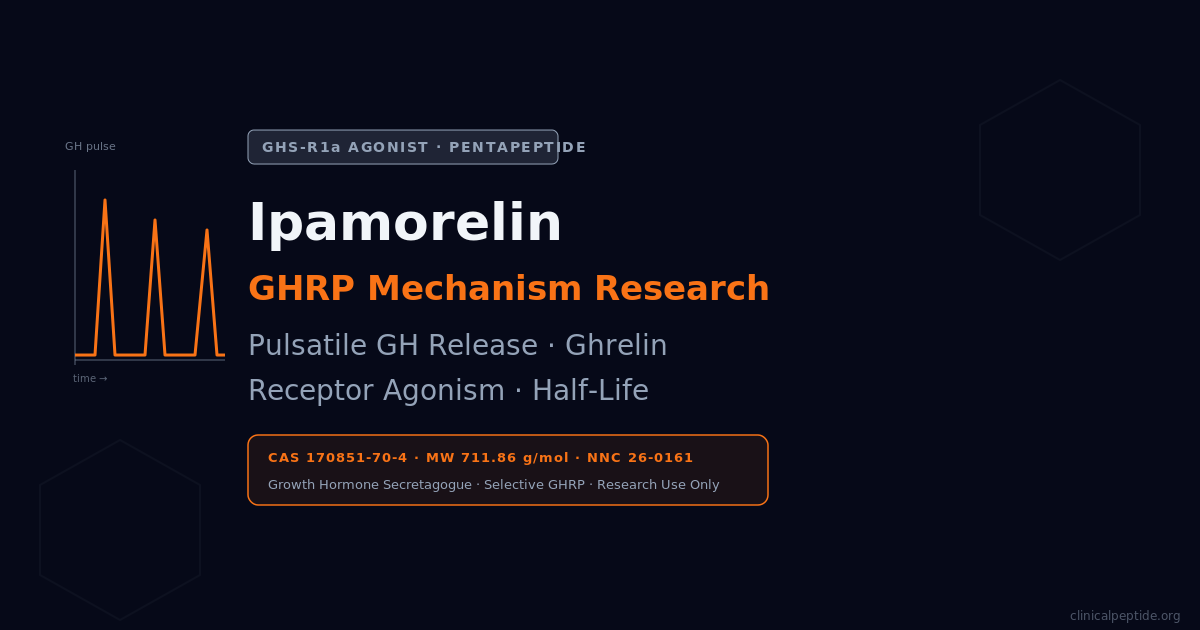
Ipamorelin Research Profile: GHRP Mechanism, Half-Life & Pulsatile GH Release
Research profile for Ipamorelin (NNC 26-0161), a selective pentapeptide growth hormone secretagogue: GHS-R1a binding mechanism, pulsatile GH release kinetics, half-life data, selectivity versus GHRP-2 and GHRP-6, and published preclinical findings.
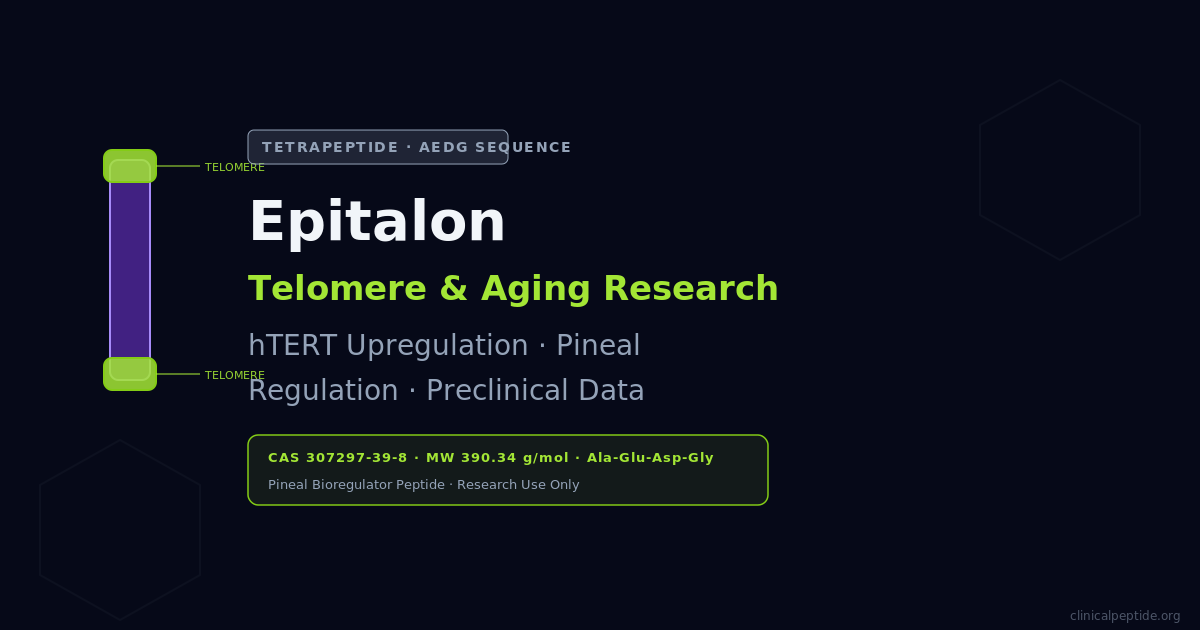
Epitalon Research Overview: Telomere Biology, Aging & Preclinical Data
A research reference for Epitalon (AEDG tetrapeptide): telomerase activation mechanism, hTERT upregulation findings, pineal/melatonin regulation data, longevity animal model results, and regulatory status ahead of the July 2026 FDA PCAC hearing.
Retatrutide TRIUMPH-1 Phase 3 Results: Weight Loss Data, Endpoints & Researcher Summary
Eli Lilly announced TRIUMPH-1 topline results May 21, 2026 — the largest pharmacological weight reduction reported to date. Full breakdown of 80-week outcomes, dose arms, secondary endpoints, and what the data means for GLP-1/GIP/glucagon triple agonism research.
MOTS-C, DSIP, Epitalon & Semax: PCAC Docket Research Summary
Mini-profiles of the four less-covered compounds in the July 2026 FDA PCAC 503A docket — MOTS-c, DSIP, Epitalon, and Semax — covering mechanism, preclinical evidence, and what the hearing means for each.
TB-500 FDA PCAC Review: What the Preclinical Record Shows
A research-focused summary of the preclinical evidence for TB-500 (Thymosin Beta-4 fragment) ahead of the July 2026 FDA PCAC 503A review — covering angiogenesis, tissue repair, cardiac models, and what the evidentiary record means for the committee.
BPC-157 503A Status: What a Category 1 Designation Means for Research Access
BPC-157 faces FDA PCAC review July 23-24, 2026. A Category 1 ruling would restrict 503A compounding. Researchers have 3 alternative pathways including IND and NCT07437547.
FDA PCAC July 2026 Full Docket Guide: BPC-157, TB-500, KPV, MOTS-c, DSIP, Epitalon & Semax
FDA PCAC July 2026 reviews 7 peptides for 503A status: BPC-157, TB-500, KPV, MOTS-c and more. Category 2 restricts compounding access. Full docket guide.
NAD+ and MOTS-C: Mitochondrial Peptide Research, AMPK Signaling & Metabolic Data
MOTS-C activates AMPK via NAD+ crosstalk in preclinical models. 3 studies, regulatory status, and compound comparison with humanin and SS-31 for researchers.
BPC-157 vs KPV: Gut Inflammation and Healing Mechanisms in Preclinical Research
BPC-157 and KPV are both studied in murine IBD and DSS colitis models but through mechanistically distinct pathways: BPC-157 activates nitric oxide signaling and angiogenesis for structural gut repair, while KPV suppresses NF-κB–driven cytokine cascades via MC1R. Covers preclinical colitis evidence, cytokine profiles, and implications for mucosal healing vs. immune modulation research.
NCT07437547 BPC-157 Phase 2 Trial: Status, Endpoints & Research Summary
Analysis of NCT07437547 — the first Phase 2 RCT of BPC-157 in humans (acute hamstring strain). Co-primary endpoints, recruiting status, Hudson Biotech sponsor data, and what this trial means for the July 23, 2026 FDA PCAC compounding review. Updated as results are reported.
Gonadorelin vs HCG: LH/FSH-Axis Research Compared
A mechanistic comparison of gonadorelin (synthetic GnRH) and human chorionic gonadotropin (HCG) as research tools for the hypothalamic-pituitary-gonadal axis, covering receptor pharmacology, differential diagnostic applications, regulatory status, and how each compound interrogates a different level of the HPG cascade.
Thymosin Alpha-1, Thymulin, and Thymalin: Thymic Peptide Family
A comparative review of three thymic immunomodulatory peptides — Thymosin Alpha-1 (EU-approved, 28-amino acid), Thymulin (zinc-dependent nonapeptide), and Thymalin (bovine thymic extract) — covering mechanism, clinical evidence, and regulatory status.
Understanding Peptide Half-Lives in Research: Degradation, Modification Strategies, and Protocol Timing
A comprehensive reference on peptide plasma half-life: how proteolytic degradation limits peptide stability, the chemical modifications used to extend half-life in research compounds (PEGylation, D-amino acids, cyclization, albumin binding), and implications for in vivo and in vitro experimental design.
Semaglutide Mechanism of Action: Complete GLP-1 Receptor Pharmacology and Clinical Evidence Reference
How semaglutide's Aib-8 substitution blocks DPP-4 cleavage, how its C18 fatty-diacid chain achieves a ~165-hour half-life via albumin binding, and how cAMP/PKA/Epac2 signaling drives GLP-1R effects across pancreas, hypothalamus, and heart — with SUSTAIN CVOT, STEP 1, and SELECT trial data.
IGF-1 LR3, DES(1-3) IGF-1, and PEG-MGF: IGF-1 Analogue Cluster
IGF-1 LR3, DES(1-3) IGF-1, and PEG-MGF are three synthetic analogues of insulin-like growth factor 1 engineered for distinct half-life, IGFBP binding, and receptor-activation profiles. This comparison reviews their mechanisms, evidence base, and differential research applications.
Selank and Semax: Complementary Anxiolytic and Nootropic Peptides
A comparative review of Selank and Semax, two synthetic neuropeptides with divergent mechanisms — Selank's GABAergic anxiolytic profile versus Semax's BDNF-upregulating and HPA-modulating properties — and how published research positions them as complementary tools in neuropeptide investigation.
FDA PCAC July 2026 Results: Committee Recommendations for All 7 Peptide Compounds
Live outcomes from the July 23–24, 2026 FDA Pharmacy Compounding Advisory Committee meeting on 503A bulk drug substance status for BPC-157, KPV, TB-500, MOTS-c, DSIP, Semax, and Epitalon. Updated as recommendations are announced.
MOTS-c: Mitochondria-Derived Peptide and Metabolic Regulator
MOTS-c is a 16-amino-acid peptide encoded within the mitochondrial 12S rRNA gene. Research highlights its AMPK-activating mechanism, age-dependent plasma decline, and exercise-mimetic activity in aged rodent models.
SS-31 vs MOTS-c: Mitochondrial Function Peptides Compared
SS-31 and MOTS-c both target mitochondrial function but via distinct mechanisms. This comparison reviews their receptor pharmacology, evidence base, and differential research applications.
Semax and the July 2026 FDA PCAC Review: 503A Withdrawn Status and Research Access
Semax carries the most urgent regulatory status of the seven peptides on the July 2026 FDA PCAC agenda: its 503A compounding classification is already listed as Withdrawn. This article explains what that designation means, why Russian approval does not resolve the FDA's evidentiary requirements, and what the July meeting could determine for domestic research access.
NAD+, MOTS-c, and Humanin: The Mitochondrial Peptide Cluster
A research comparison of three mitochondria-derived signaling molecules — NAD+, MOTS-c, and Humanin — covering their distinct mechanisms, primary receptor systems, aging-related decline, and differential research applications.
MOTS-c FDA PCAC July 2026: 503A Review and Research Access
MOTS-c — encoded in mitochondrial DNA and anchored by a 2015 Cell paper — faces FDA PCAC review on July 23, 2026. This article covers its AMPK-activation mechanism, endogenous status, and the strongest evidence base of any July 2026 PCAC compound.
KPV FDA PCAC July 2026: 503A Review and Research Access
The FDA Pharmacy Compounding Advisory Committee will evaluate KPV's 503A bulk drug substance status on July 23, 2026. This article covers KPV's regulatory history, the four-factor PCAC analysis, and outcome scenarios for compounded access.
Epitalon FDA PCAC July 2026: 503A Review and Research Access
Epitalon (Epithalon) faces FDA Pharmacy Compounding Advisory Committee review on July 24, 2026. This article covers Epitalon's telomerase-activation research, its 503A regulatory position, and the outcome scenarios for compounded access.
DSIP FDA PCAC July 2026: 503A Review and Research Access
Delta Sleep-Inducing Peptide (DSIP) faces FDA Pharmacy Compounding Advisory Committee review on July 24, 2026. This article covers DSIP's research history, its endogenous-peptide regulatory argument, and what the PCAC determination means for 503A access.
TB-500 and the July 2026 FDA PCAC Review: What It Means for 503A Research Access
TB-500 holds a 503A Category 2 classification ahead of the July 2026 FDA PCAC meeting, with additional regulatory complexity from its WADA-prohibited status. This article examines the four-factor PCAC analysis and the three possible outcomes for domestic research access.
Epitalon, Pinealon, and Cortagen: Khavinson Bioregulator Family
A research comparison of three Khavinson short peptide bioregulators — Epitalon, Pinealon, and Cortagen — examining their distinct sequences, tissue derivations, proposed mechanisms, and preclinical evidence profiles.
BPC-157 and the July 2026 FDA PCAC Review: What It Means for 503A Research Access
BPC-157 holds a 503A Category 2 classification ahead of the July 2026 FDA Pharmacy Compounding Advisory Committee meeting. This article traces its regulatory history, the four-factor PCAC analysis, and the three possible outcomes for domestic research access.
Argireline vs SNAP-8 vs Matrixyl: Topical Cosmetic Peptides Compared
A mechanistic comparison of three topical cosmetic peptides — Argireline, SNAP-8, and Matrixyl — examining their distinct molecular targets, evidence profiles, and research applications in skin aging research.
GHK-Cu vs GHK: Copper Complex vs Free Tripeptide
GHK-Cu and GHK describe chemically distinct species of the same parent tripeptide. This comparison examines how copper coordination changes their mechanism, potency in wound models, and research applications.

Is Sermorelin FDA Approved? Regulatory History and Current Status
Sermorelin received FDA approval under the brand name Geref for pediatric GH deficiency, but was voluntarily withdrawn in 2008. This article traces the full regulatory history, the 503A compounding context, and how sermorelin compares to tesamorelin — the only currently approved GHRH analogue.

Best Peptides for Cognitive Research: 8 Compounds Studied for Brain Function
A ranked overview of eight peptides that recur most in the published cognitive neuroscience and neuroprotection literature — from ACTH derivatives and HGF-pathway modulators to mitochondrial peptides and neuropeptide mixtures with clinical evidence.
AOD-9604 vs HGH Fragment 176-191: GH-Derived Fat-Loss Peptides
A comparison of two synthetic growth hormone-derived fragments — AOD-9604 and HGH Fragment 176-191 — examining their structural differences, lipolytic mechanisms, clinical trial history, and regulatory status.
PT-141 and Bremelanotide: One Compound, Two Names
PT-141 and bremelanotide refer to the same melanocortin receptor agonist molecule — PT-141 is the early research code, bremelanotide is the INN used in clinical and regulatory contexts. This article disambiguates both naming conventions.

Best Peptides for Skin and Hair Research
Seven peptides studied in skin and hair biology — from GHK-Cu's decades of collagen research to SNARE-targeting wrinkle peptides and melanocortin agonists — ranked by evidence depth and mechanistic specificity.
Best Peptides for Sleep Research: DSIP and Beyond
Five peptide compounds with documented relevance to sleep research, ranked by regulatory maturity and evidence depth — from FDA-approved sermorelin to the foundational Delta Sleep-Inducing Peptide first isolated in 1974.
Anamorelin: Research Profile and WADA 2026 Status Update
The WADA 2026 Prohibited List explicitly names anamorelin under S2 growth hormone secretagogues. This profile covers its GHS-R1a mechanism, the ROMANA Phase III cachexia data, and its current regulatory standing across jurisdictions.
Cagrilintide and CagriSema: Amylin + GLP-1 Phase 3 Research Review
Cagrilintide is a long-acting amylin analogue that, combined with semaglutide as CagriSema, produced 20.4% mean weight loss in the Phase 3 REDEFINE 1 trial. This article covers the amylin receptor mechanism, the REDEFINE program results, NDA submission status, and research applications.
Semaglutide vs Retatrutide: Mono- vs Triple-Agonist Mechanisms
A mechanistic comparison of semaglutide's selective GLP-1R agonism and retatrutide's tri-agonism at GLP-1R, GIPR, and GCGR, covering receptor pharmacology, Phase 2/3 efficacy data, and regulatory status as of 2026.
Survodutide: The Dual GLP-1 / Glucagon Agonist in Phase 3 Research
Survodutide (BI 456906) is the first dual GCGR/GLP-1R agonist to complete Phase 3 evaluation for obesity. The SYNCHRONIZE-1 trial reported 16.6% mean body weight reduction at 76 weeks. This article covers the mechanism, Phase 3 evidence, MASH regulatory designations, and research applications.

Best Peptides for Muscle and Performance Research
A ranked overview of eight peptides studied in muscle physiology and anabolism research, covering IGF-1 receptor agonists, myostatin inhibitors, ghrelin-receptor secretagogues, and mechano-responsive splice variants.
Best Peptides for Longevity Research: 8 Anti-Aging Compounds
A ranked overview of eight compounds central to longevity and anti-aging research, spanning the telomere, mitochondrial, NAD+/sirtuin, and cellular-senescence theories of aging — from the investigational mitochondrial peptide SS-31 to the senolytic FOXO4-DRI.

Best Peptides for Tissue Repair and Recovery Research
A ranked overview of six peptides that recur most in the published tissue-repair and recovery literature. Entries range from the broadly studied pentadecapeptide BPC-157 and the thymosin beta-4 derivative TB-500 to copper tripeptides and immunomodulatory thymosin alpha-1.
Best Peptides for Weight Loss Research: 9 Compounds Ranked
A ranked overview of nine peptides and small molecules that dominate the published weight-loss and metabolic research literature, from FDA-approved GLP-1 and GIP agonists to investigational triple agonists, NNMT inhibitors, and GH-derived lipolytic fragments.
MK-677 vs Ipamorelin: Oral Ghrelin Mimetic vs Injectable GHRP
MK-677 (ibutamoren) is an oral, non-peptide growth hormone secretagogue with a ~24-hour half-life; ipamorelin is an injectable pentapeptide GHRP producing short pulsatile GH bursts — both via GHS-R1a. This head-to-head covers route of administration, pharmacokinetics, IGF-1 elevation profiles, and how each compound is applied in published preclinical and clinical research.
Tesamorelin vs Sermorelin: FDA-Approved GHRH Analogues Compared
Tesamorelin and sermorelin are the two FDA-approved GHRH analogues, but they differ in sequence, half-life, approved indication, and compounding status. This comparison summarizes the molecular design, pharmacokinetics, and regulatory landscape distinguishing the two compounds.
CJC-1295 vs CJC-1295 with DAC: Pulsatile vs Sustained GH Release
CJC-1295 (Modified GRF 1-29) and CJC-1295 with DAC share the same GHRH backbone but differ in half-life by orders of magnitude. This comparison summarizes the pharmacokinetic, mechanistic, and regulatory distinctions that determine which variant is appropriate for a given research question.
FDA July 2026 PCAC Meeting Preview: 7 Peptides Up for 503A Reclassification
The FDA's Pharmacy Compounding Advisory Committee is expected to review BPC-157, TB-500, KPV, MOTS-c, DSIP, Epitalon, and Semax in July 2026. A Category 1 determination for any of these compounds would remove them from the 503A compounding channel.
Retatrutide vs Tirzepatide: Triple vs Dual Agonist Mechanism Comparison
Tirzepatide targets GLP-1R and GIPR; retatrutide adds glucagon receptor agonism for a triple-axis mechanism. This comparison examines receptor pharmacology, Phase 3 evidence, and research-application considerations for both compounds.
FDA 503B GLP-1 Exclusion Proposal (April 30, 2026): What It Means for Peptide Research
On April 30, 2026, the FDA proposed formally excluding GLP-1 receptor agonists from the 503B bulk compounding eligibility list. This article summarizes the proposal, the 503A vs. 503B distinction, and the June 29 comment deadline.

HCG in Research: Beyond Fertility Applications
Human chorionic gonadotropin (HCG) has a long research history outside fertility medicine, including studies in Leydig cell function, testosterone production support, and weight regulation hypotheses from the 1950s onward.
Oxytocin Research Beyond Bonding: Cardiovascular and Metabolic Studies
Beyond its well-known roles in social bonding and parturition, oxytocin has an emerging research literature in cardiovascular protection, metabolic regulation, and gut motility. This article reviews the preclinical and clinical data.
FGL (Fibroblast Growth Loop): A Neuroprotective Research Peptide
FGL is a 15-amino acid peptide derived from the second fibronectin type III domain of NCAM, studied for synaptogenesis promotion and neuroprotective effects in rodent models of aging and neurodegeneration.
The Future of Peptide Therapeutics: FDA Pipeline and Approved Compounds
Over 100 peptide therapeutics are currently FDA-approved and hundreds more are in clinical pipelines. This article surveys the regulatory landscape, current approval categories, and what the emerging pipeline suggests about the next decade.
Tesofensine: A Triple Monoamine Reuptake Inhibitor Research Profile
Tesofensine inhibits reuptake of dopamine, norepinephrine, and serotonin and was studied in Phase 2/3 clinical trials for obesity, Parkinson's disease, and Alzheimer's disease. This article reviews the trial history.
5-Amino-1MQ and NNMT Inhibition: Metabolic Research Overview
5-Amino-1MQ is a small-molecule NNMT inhibitor studied for effects on adipogenesis, NAD+ metabolism, and metabolic rate in preclinical obesity models. This article covers the mechanism and published findings.
ARA-290 and Erythropoietin-Derived Peptides: Research Overview
ARA-290 is an 11-amino acid peptide derived from the innate repair receptor-binding domain of erythropoietin, studied for neuroprotection and anti-inflammatory effects without erythropoietic activity.
Dihexa: A Brain-Penetrant Angiotensin Analogue Under Research
Dihexa (PNB-0408) is a hexapeptide derived from angiotensin IV with reportedly potent pro-cognitive effects in rodent models via HGF/MET signaling. This article covers what the published research has found.
How to Read a Clinical Trial Registration (NCT Entry)
ClinicalTrials.gov NCT entries contain structured data on study design, endpoints, eligibility, and status. This guide explains how to read an NCT entry and extract meaningful information about a peptide compound's clinical trial history.

How to Read a PubMed Abstract: A Researcher's Guide
PubMed abstracts follow a structured format — background, methods, results, conclusions — but interpreting them correctly requires understanding study design, statistical reporting, and common limitations. This guide covers all of it.
MOTS-c: The Mitochondrial-Derived Peptide in Metabolic Research
MOTS-c is a 16-amino acid peptide encoded in mitochondrial rDNA, discovered in 2015, with published effects on insulin sensitivity, exercise mimicry, and metabolic aging in preclinical models.
Kisspeptin-10: The Reproductive Axis Research Peptide
Kisspeptin-10 is a 10-amino acid fragment of the KISS1 gene product that acts as a potent GnRH secretagogue. It has been studied in human trials for hypogonadism, fertility, and sexual function research.

P21 Peptide and Cognitive Research: What Early Studies Found
P21 is a small peptide derived from the ciliary neurotrophic factor (CNTF) that has been studied in rodent models for neurogenesis promotion and cognitive enhancement without the side effects of full-length CNTF.
Gonadorelin and LH Pulse Research: An Overview
Gonadorelin is a synthetic decapeptide identical to endogenous GnRH, used in research models of the hypothalamic-pituitary-gonadal axis and as a diagnostic agent for hypogonadotropic hypogonadism.

Peptide Bioavailability: Why Route of Administration Matters in Studies
Oral bioavailability for most peptides is extremely low due to gastrointestinal proteolysis and poor mucosal permeability. This article reviews how different routes of administration affect peptide pharmacokinetics in research models.
Lyophilization and Storage: How Research Peptides Are Preserved
Lyophilization (freeze-drying) is the gold standard for peptide preservation, removing water under vacuum to create a stable powder. This article covers the process, storage conditions, and reconstitution best practices.
BPC-157 vs GHK-Cu for Tissue Repair: What the Literature Shows
BPC-157 and GHK-Cu are two of the most studied peptides in tissue repair research. Despite targeting overlapping outcomes, their mechanisms diverge significantly — this article examines each and what the comparative literature suggests.
Thymosin Alpha-1 vs LL-37: Immunomodulatory Research Profiles
Both Thymosin Alpha-1 and LL-37 modulate innate immunity but through distinct mechanisms — Thymosin Alpha-1 operates via TLR-9 and T-cell pathways while LL-37 is a cathelicidin with direct microbial and TLR-4 activity.
Retatrutide: The Triple Agonist in GLP-1 Research
Retatrutide (LY3437943) is a once-weekly GLP-1/GIP/glucagon triple receptor agonist in Phase 3 trials demonstrating greater weight reduction than existing dual agonists. This article covers its mechanism and Phase 2 data.
LL-37: The Antimicrobial Peptide Under Research
LL-37 is the sole member of the human cathelicidin family, with antimicrobial, anti-biofilm, and immunomodulatory activities studied in infection, wound healing, and cancer biology.
Follistatin-344 and Myostatin: Muscle Research Pathways
Follistatin-344 inhibits myostatin (GDF-8), a TGF-beta family member that negatively regulates skeletal muscle mass. This article reviews the myostatin pathway and what gene therapy and peptide-based research has found.
KPV Peptide: Gut Inflammation Research Summary
KPV is a C-terminal tripeptide of alpha-MSH studied for anti-inflammatory activity in intestinal epithelial cells and murine models of IBD. This overview covers the mechanism and the emerging research landscape.
Understanding Peptide Half-Lives: Why Timing Matters in Research
Peptide half-life determines dosing frequency in research protocols and is influenced by molecular weight, protease stability, and chemical modifications like PEGylation or DAG conjugation. This article explains the key concepts.
Understanding Peptide Purity: HPLC and Mass Spectrometry Testing
Peptide purity is verified through reverse-phase HPLC (which measures purity by UV absorbance) and mass spectrometry (which confirms molecular identity). This article explains both techniques and what the results mean for research quality.
Semaglutide vs Liraglutide: Mechanism, Half-Life & Research Comparison
Semaglutide (C18 fatty diacid linker, ~165-hour half-life) vs liraglutide (C16 fatty acid, ~13-hour half-life): a research comparison of GLP-1 receptor agonist pharmacology, cardiovascular outcomes data (SUSTAIN-6 vs LEADER), and regulatory status.
Melanotan I vs Melanotan II: Melanocortin Research Comparison
Melanotan I (afamelanotide) and Melanotan II are melanocortin receptor agonists studied for photoprotection and other effects, but differ in receptor selectivity, side-effect profiles, and regulatory status.
IGF-1 LR3 vs Des-1-3-IGF-1: Structural and Research Differences
IGF-1 LR3 and Des-1-3-IGF-1 are modified analogues of native IGF-1 with differing binding protein affinities and half-lives. This article compares their structural properties and what in vitro and in vivo studies report.
VIP (Vasoactive Intestinal Peptide): Immunological Research Applications
Vasoactive Intestinal Peptide is a 28-amino acid neuropeptide with potent anti-inflammatory and immunomodulatory properties studied in autoimmune disease, pulmonary hypertension, and MCAS models.
DSIP (Delta Sleep-Inducing Peptide): Sleep Research Overview
DSIP is a nonapeptide first isolated in 1977 and studied for effects on sleep architecture, stress response, and circadian rhythm modulation. This article reviews what preclinical and early human studies found.
Humanin and SS-31: Mitochondria-Targeting Peptides in Anti-Aging Research
Humanin and SS-31 (elamipretide) are two mitochondria-targeted peptides with growing research literature in aging biology, cardiac protection, and metabolic disease. This article covers their distinct mechanisms and trial data.
Cerebrolysin: Neuroprotective Research and Mechanism Overview
Cerebrolysin is a porcine brain-derived peptide mixture with a substantial clinical trial record in stroke, traumatic brain injury, and neurodegenerative disease. This overview examines the proposed mechanisms and the evidence base.
The Difference Between Peptides and Proteins: A Biochemical Primer
The distinction between peptides and proteins is defined by chain length and structural complexity, but the boundary is not always sharp. This primer covers primary structure, nomenclature conventions, and why it matters for research classification.

What Is Bacteriostatic Water and Why It Matters for Reconstitution
Bacteriostatic water (0.9% benzyl alcohol in sterile water for injection) is the standard diluent for peptide reconstitution in laboratory research. This article explains its composition, antimicrobial mechanism, and why it is preferred over alternatives.
Semax vs Selank: Comparing the Two Russian Neuropeptides
Semax and Selank share Russian origins and research use in cognitive domains, but target distinct neurological pathways. Semax is a pro-cognitive ACTH analogue; Selank is an anxiolytic enkephalin analogue. This article compares them.
Ipamorelin vs GHRP-2 vs GHRP-6: Ghrelin Mimetic Comparison
Ipamorelin, GHRP-2, and GHRP-6 are ghrelin receptor agonists studied for GH pulse amplification. This comparison examines their selectivity, cortisol side-effect profiles, and relative GH-releasing potency from published studies.
CJC-1295 vs Sermorelin: GHRH Analogue Research Comparison
CJC-1295 and sermorelin are both synthetic GHRH analogues studied for GH secretagogue activity, but they differ in half-life, binding kinetics, and clinical trial evidence. This article compares the research head-to-head.
AOD-9604: The GH Fragment in Metabolic Research
AOD-9604 is a 16-amino acid fragment of human growth hormone studied for lipolytic activity without the anabolic effects of full-length GH. This article covers its development history and the clinical trial record.
Thymosin Alpha-1 and Immune Modulation: Research Summary
Thymosin Alpha-1 is a thymic peptide with regulatory roles in T-cell maturation and innate immune signaling. It is one of the few peptides to have reached clinical approval in multiple countries for infectious disease indications.
MK-677: An Oral Ghrelin Mimetic — What Studies Demonstrate
MK-677 (ibutamoren) is an orally active ghrelin receptor agonist studied for its sustained GH and IGF-1 elevation in clinical trials. This overview summarizes the pharmacology, trials, and available safety data.
GHK-Cu: Copper Peptide Research and Wound Healing Studies
GHK-Cu (copper tripeptide-1) has an extensive literature spanning wound healing, collagen synthesis, anti-inflammatory signaling, and skin biology. This review covers the key preclinical and early clinical findings.
IGF-1 and Its Analogues: What the Research Shows
IGF-1 and its analogues (IGF-1 LR3, Des-1-3-IGF-1) have a substantial preclinical literature covering muscle, bone, and metabolic effects. This overview covers the key studies and structural differences between analogues.
The Science Behind Peptide Reconstitution
Lyophilized peptide reconstitution is a foundational laboratory skill. This guide covers the chemistry of bacteriostatic water, concentration calculations, solubility considerations, and storage best practices for research applications.
How Tirzepatide Differs from Semaglutide: Dual Agonist Mechanism
Tirzepatide is a GIP/GLP-1 dual receptor agonist, making it pharmacologically distinct from semaglutide. This article breaks down the receptor binding differences and what head-to-head studies have found.
Semax and Selank: Neuropeptide Research from Russian Science
Semax and Selank are synthetic neuropeptides developed in Russia with published data on cognitive enhancement, anxiolytic effects, and BDNF modulation. This article reviews the primary literature.
NAD+: The Research Behind the Longevity Molecule
NAD+ is a coenzyme central to cellular energy metabolism and a growing area of longevity research. This article covers the biochemistry, preclinical data, and clinical trial landscape for NAD+ supplementation research.
Epitalon and Telomere Research: What Preclinical Studies Found
Epitalon is a tetrapeptide studied for its effects on telomerase activity and telomere elongation in cell culture and animal models. This overview covers the primary Russian and international research literature.
CJC-1295 and Ipamorelin: The Growth Hormone Stack in Research
CJC-1295 (GHRH analogue) and Ipamorelin (ghrelin mimetic) are frequently co-studied in preclinical GH secretion research. This article covers each compound and what combination studies demonstrate.
Research reference only. All articles on this blog are summaries of peer-reviewed scientific literature. Nothing here constitutes medical advice or guidance for human use. Read our full disclaimer.